

Ashwagandha Not Working After Two Weeks? Here's What's Actually Going On
Two weeks in, nothing obvious has changed. No calmer mornings, no better sleep, no noticeable shift in energy. If that sounds familiar, you are not alone, and you are probably not doing anything wrong.
The problem is expectation management. Ashwagandha is marketed with the kind of urgency that implies you will feel different within days. The clinical reality is more measured: most well-designed trials run for six to eight weeks before reporting significant results, and some benefits take longer still. Two weeks is, for many people, still the early phase.
That said, "be patient" is not the whole answer. There are real variables that determine whether ashwagandha works for you, and some of them are worth checking now rather than after another month of nothing. This guide covers the timeline the research actually supports, the four most common reasons users feel no effect, and what to do about each one.
Key point: Two weeks is within the normal window of "not yet." Most clinical trials measure outcomes at six to eight weeks. If your dose, product quality, and consistency are right, continuing is the evidence-based call.
What the Research Actually Says About Timing
Ashwagandha is an adaptogen, not a stimulant. It works by gradually modulating your body's stress response systems, particularly the hypothalamic-pituitary-adrenal (HPA) axis, rather than producing an immediate chemical shift. That biological mechanism is why the timeline is longer than most supplement marketing suggests.
Here is how the evidence breaks down by timeframe:
|
Timeframe |
What the research shows |
|---|---|
|
Days 1-7 |
Some users report mild calming or improved sleep onset. These are early, subjective signals, not consistent across trials. A six-week RCT in Sleep Medicine found the treatment group reported 72% improvement in sleep quality vs 29% in placebo, but measurable actigraphy improvements took the full six weeks. |
|
Weeks 2-4 |
Early measurable changes in stress and anxiety markers begin to appear in some RCTs. Still within the variable window. |
|
Weeks 4-8 |
The most consistently reported zone for noticeable improvement. Multiple RCTs consistently report significant reductions in stress, anxiety, and depression markers across this period, with most trials using the Perceived Stress Scale or Hamilton Anxiety Scale as outcome measures. |
|
Weeks 8-12 |
Benefits tend to stabilise. Cognitive function improvements and physical performance gains are more commonly reported at this stage. |
A 2024 systematic review and meta-analysis analysed nine RCTs involving 558 patients and found significant reductions in Perceived Stress Scale scores, Hamilton Anxiety Scale scores, and serum cortisol levels compared to placebo. The trials ran for six to eight weeks, which is consistent with where the meaningful clinical data sit.
Why the Effects Feel Subtle at First
A common source of disappointment is expecting a drug-like response. Ashwagandha does not work that way. Changes tend to be cumulative: slightly better sleep quality over a week, a gradual reduction in the intensity of stress responses, and less physical tension. These are not the kind of effects you notice on a Tuesday morning. They are the kind you notice when you look back after six weeks and realise things have shifted.
Clinical questionnaires used in trials, such as the Perceived Stress Scale and PSQI sleep index, are specifically designed to detect these subtle shifts. In everyday life, without that structured measurement, the changes can feel invisible even when they are happening.
Four Reasons Ashwagandha May Not Be Working Yet
If two weeks have passed and you are questioning whether to continue, it is worth running through these four checks before giving up.
1. Your Dose May Be Too Low
This is the most common issue, and it is directly tied to product quality. The clinical evidence for ashwagandha's benefits centres on a specific dosage range: 300-600 mg per day of a standardised extract, typically standardised to 5% withanolides. Withanolides are the active compounds responsible for ashwagandha's adaptogenic effects.
The problem is that many products on the market use raw root powder rather than a standardised extract. A 500 mg capsule of root powder contains a fraction of the withanolide content of a 300 mg standardised extract. If your product does not specify the extract type and standardisation percentage on the label, you may be taking far less active compound than the research doses.
What to check: Look for "standardised extract" on the label, with withanolide content listed. If it just says "ashwagandha root powder" with no standardisation detail, the dose may not be clinically meaningful.
2. You Have Not Been Consistent
Ashwagandha requires daily, uninterrupted use to build its effects. Missing doses regularly, even a few times per week, disrupts the cumulative mechanism. This is not a supplement you can take when you remember and expect results.
If your two weeks have included gaps, the effective timeline resets partially. Consistent daily use is non-negotiable for the research-backed outcomes.
3. Your Expectations May Not Match What Ashwagandha Does
Ashwagandha has a reasonably strong evidence base for stress reduction, anxiety, sleep quality, and physical recovery. It does not have strong evidence for acute energy, mood elevation in the way a stimulant might produce, or rapid body composition change.
If you started taking it hoping for noticeable energy or focus, you may be measuring the wrong outcomes. The benefits are primarily about what you feel less of (stress, tension, disrupted sleep) rather than a positive spike you can point to.
4. Individual Variability Is Real
Even in well-controlled RCTs, not every participant responds. Even in well-controlled RCTs, group-level improvements always obscure individual non-responders, and ashwagandha trials are no exception. Factors including baseline stress levels, gut microbiome, liver metabolism, and the specific stressors in your life all influence response.
This does not mean ashwagandha will not work for you. It means that if the other three factors above are correct and you still feel nothing by week eight, that is a legitimate signal to reconsider rather than a failure of the supplement.
A Note on Safety and UK Supplement Guidance
Most people tolerate ashwagandha well at standard doses, but it is worth knowing the current UK regulatory picture before continuing long-term.
The Food Standards Agency (FSA) has stated that there are no established safe levels for ashwagandha in UK food supplements, and has called for a formal risk assessment. The areas of concern include potential effects on thyroid function, blood glucose, and, in rare cases, liver health. This does not mean ashwagandha is unsafe at typical doses. It means the evidence base for long-term use beyond three months is limited, and the FSA is applying appropriate caution.
A 2023 randomised, double-blind, placebo-controlled trial published in Medicine found that 500 mg of standardised ashwagandha extract taken daily for 60 days was well tolerated with no adverse biochemical or haematological changes, which is consistent with the broader short-term safety picture across the clinical literature. Known side effects at normal doses are generally mild: drowsiness, stomach upset, and occasional headache.
Practical guidance for UK users:
-
Stick to the studied dose range of 300-600 mg standardised extract per day
-
Do not exceed three months of continuous use without a break, given the current evidence gaps
-
If you are pregnant, breastfeeding, have a thyroid condition, or take medication for blood sugar or blood pressure, speak to your GP before using ashwagandha
-
If you experience unusual fatigue, jaundice, or persistent digestive issues, stop use and seek medical advice
What to Do Right Now
Run through this checklist before deciding whether to continue, switch products, or stop:
-
Check your product label. Does it say "standardised extract" with a withanolide percentage? If not, the dose may not be clinically relevant.
-
Confirm your daily dose. You should be taking 300-600 mg of standardised extract per day. Below 300 mg is unlikely to produce measurable effects based on the current evidence.
-
Review your consistency. Have you taken it every day without gaps? If not, your effective timeline is shorter than two weeks.
-
Revisit what you are measuring. Are you looking for reduced stress and better sleep, or something else? If it is the latter, check whether ashwagandha is the right supplement for that goal.
-
Set a proper review point. If everything above checks out, commit to six to eight weeks of consistent use before making a final judgment. That is the window the clinical evidence supports.
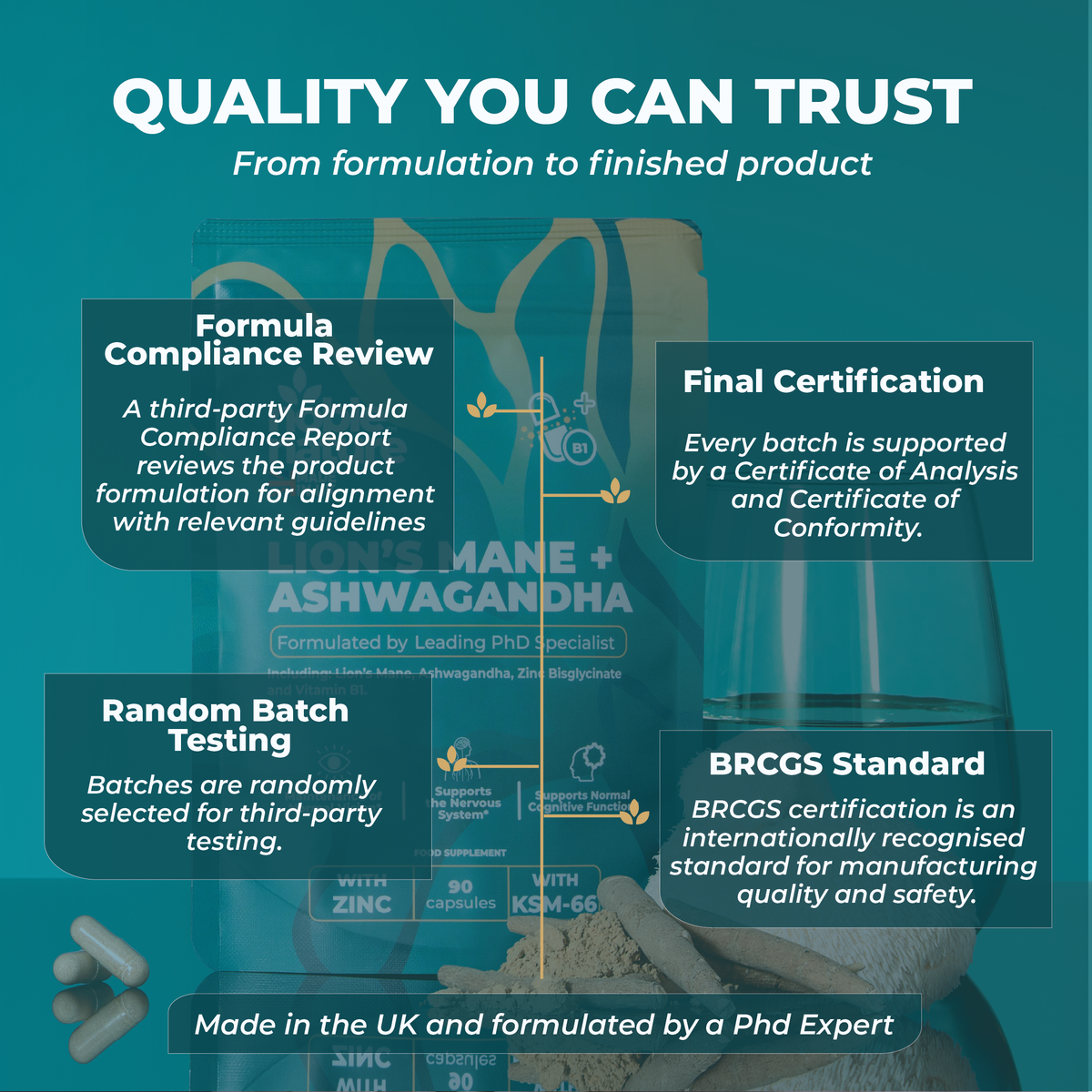
If you have checked all of the above and are still unsure about your current product, NobleNature's ashwagandha is formulated to the studied dose range using a standardised extract, developed alongside a PhD scientist and registered nutritionist. Transparent labelling, UK manufacturing, and third-party testing are standard across the range.
The supplement industry is full of products that look the same on the surface but differ significantly in what they actually deliver. Knowing what to look for is half the work.
Share:
How Long Until Vitamin D3 and K2 Supplements Start Working (And What to Expect Week by Week)
GLP-1 and B12: Is There Really a Risk, and Who Should Pay Attention?