

Beetroot and vitamin B12 are two of the most searched supplements in the UK, often lumped together under the vague banner of "energy support." But they work through completely different mechanisms, suit different people, and solving the wrong problem with the wrong supplement is a waste of money at best.
This guide breaks down who genuinely benefits from each, who benefits from both together, and who probably doesn't need either.
The short version: Vitamin B12 addresses a nutritional gap. Beetroot supports physical performance and blood flow. They're not interchangeable, but for some people, they're highly complementary.
Who Should Take Vitamin B12
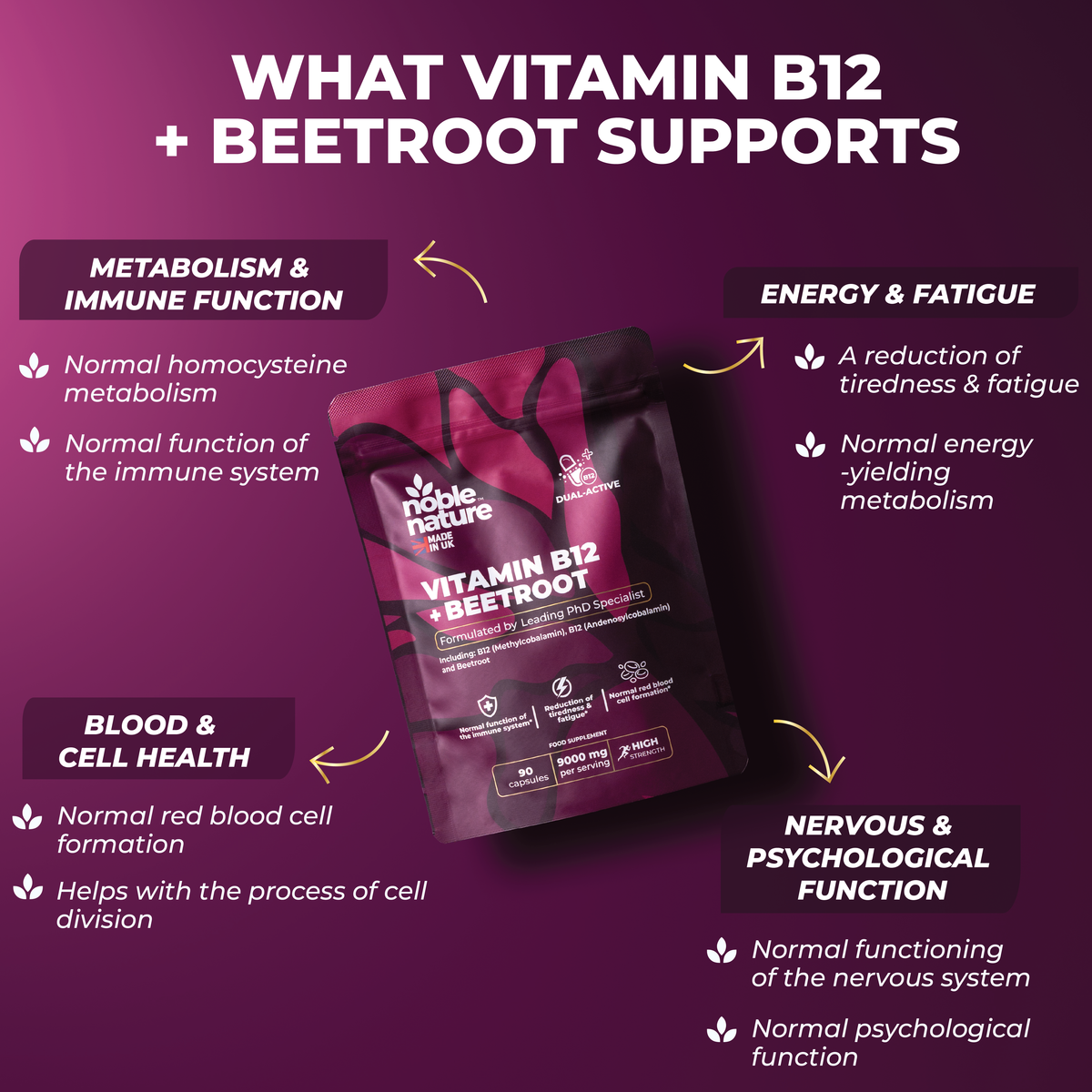
Vitamin B12 is an essential nutrient. Your body cannot produce it, so it must come entirely from diet or supplementation. It contributes to the normal functioning of the nervous system, normal red blood cell formation, and the reduction of tiredness and fatigue. These are authorised claims under UK food law, not marketing copy.
The problem is that B12 is found almost exclusively in animal products, which means certain groups are consistently under-supplied. UK clinical data puts deficiency prevalence at around 6% in adults under 60, rising to 20% in those over 60, and 11% in people following vegan diets.
You are a strong candidate for B12 supplementation if:
-
You follow a vegan or a vegetarian diet. Plant-based diets contain little to no B12. The NHS advises that vegans take a B12 supplement or eat fortified foods daily, and NICE guidelines (NG239, updated March 2024) specifically identify vegan and vegetarian diets as a primary risk factor for deficiency.
-
You are over 50. The body's ability to absorb B12 from food declines with age due to reduced stomach acid production. Deficiency in older adults is more common than most people realise.
-
You are pregnant or breastfeeding. B12 requirements increase during pregnancy. Inadequate intake can affect foetal neurological development.
-
You take metformin or long-term antacids. Both medications are known to reduce B12 absorption over time.
-
You have had gastric surgery or have a digestive condition such as Crohn's disease or coeliac disease, which can impair nutrient absorption.
-
You feel persistently tired despite adequate sleep, experience brain fog, or notice tingling in your hands or feet. These can be signs of low B12 status, though a GP blood test is the right way to confirm this.
Who probably does not need a B12 supplement:
If you eat meat, fish, eggs, and dairy regularly and have no digestive conditions affecting absorption, your dietary intake is likely sufficient. Supplementing on top of an adequate diet will not give you more energy than normal. B12 does not provide a stimulant effect; it corrects a deficiency.
Who Should Take Beetroot Supplements
Beetroot works through a different pathway entirely. It is rich in dietary nitrates, which the body converts to nitric oxide. Nitric oxide helps relax and widen blood vessels, which supports healthy blood flow and oxygen delivery to muscles. This is why beetroot has become a staple in sports nutrition research.
Unlike B12, beetroot does not correct a deficiency. It is providing a functional input that most people simply do not get enough of from diet alone. The average UK adult eats far below the recommended vegetable intake, and beetroot is not a common daily food.
Beetroot supplementation is well-suited to you if:
-
You exercise regularly and want to support endurance. A 2025 umbrella review of meta-analyses found that dietary nitrate supplementation improved time-to-exhaustion, total distance covered, and muscular endurance across a range of exercise types. The effect is most pronounced with a minimum dose of around 370mg per day taken consistently for more than three days.
-
You do moderate-intensity cardio such as cycling, running, swimming, or HIIT. Research consistently shows the strongest benefits in recreational exercisers and those with low-to-moderate training levels. Highly trained endurance athletes tend to see smaller gains, likely because their cardiovascular systems are already highly efficient.
-
You feel sluggish during workouts despite being well-rested and well-nourished. Studies show beetroot juice can reduce the oxygen cost of submaximal exercise by around 3-5%, meaning your body uses oxygen more efficiently at the same workload. That translates to less perceived effort and better stamina.
-
You want to support normal blood pressure as part of a healthy lifestyle. Nitric oxide has a well-documented role in vascular function, and dietary nitrate from beetroot contributes to this.
-
You are an older adult who remains active. Nitric oxide production naturally declines with age, making dietary nitrate more relevant for maintaining vascular health.
Who probably does not need a beetroot supplement:
If you eat a wide variety of vegetables daily (including leafy greens, spinach, and rocket, which are also high in nitrates), you may already be getting adequate dietary nitrate. Beetroot supplementation is most impactful when the baseline diet is low in these foods. It is also not a substitute for medical treatment if blood pressure concerns are clinically significant.
Who Benefits from Taking Both Together
The combination makes most sense when both mechanisms are relevant to the same person. These are not competing supplements; they address different physiological needs and can be taken alongside each other without issue.
The overlap is strongest for people who tick boxes in both lists above. A few specific profiles stand out.
|
Profile |
Why are both relevant |
|---|---|
|
A vegan or a vegetarian who exercises |
High B12 deficiency risk + low dietary nitrate intake from limited variety |
|
Adults over 50 who remain active |
Declining B12 absorption + natural reduction in nitric oxide production |
|
People with persistent low energy and exercise fatigue |
B12 addresses nutritional gap; beetroot supports oxygen delivery during activity |
|
Busy adults eating a limited diet |
Both nutrients are commonly under-consumed when the diet lacks variety |
The key distinction: if your tiredness is constant and present even at rest, B12 (or another nutritional gap) is the more likely factor. If your fatigue is specifically during or after physical activity, beetroot is the more targeted option. Many people experience both, which is where the combination earns its place.
The Bottom Line
Neither supplement is for everyone, and that is the point. Vitamin B12 is most relevant when diet or absorption leaves a genuine gap. Beetroot is most relevant when physical performance and blood flow are the priority. Together, they suit a specific but fairly common profile: active adults, plant-based eaters, and anyone over 50 who wants to stay on top of both energy and physical output.
If you fall into one of those categories, both are worth considering. If you do not, save your money for something that actually addresses your situation.
At NobleNature, our formulations are developed alongside a PhD scientist and a registered nutritionist, so every product is built around the evidence, not the trend. If you want to understand more about what is actually in our supplements and why, explore our ingredient education guides.
Share:
Eye Defence+: The Benefits of Vitamin A, Zinc, Lutein and Zeaxanthin for Eye Health
How Long Until Vitamin D3 and K2 Supplements Start Working (And What to Expect Week by Week)