

Ashwagandha is one of the most talked-about supplements in the stress and wellbeing space. Search for it on TikTok or Instagram, and you will find thousands of videos claiming it "destroys cortisol," "fixes your stress hormones," and delivers visible results within days. The reality, as with most things in nutrition science, is more measured than that.
There is genuine evidence behind ashwagandha. Multiple peer-reviewed trials and two recent systematic reviews have found it can produce meaningful reductions in cortisol levels. But the size of that effect, the conditions under which it occurs, and what it does (and does not) mean for how you actually feel are all worth understanding before you buy anything.
The short version: Ashwagandha has good evidence for reducing cortisol in adults under chronic stress, particularly at doses of 300-600 mg daily over 8+ weeks. It is not a quick fix, and it is not equally effective for everyone. But it is one of the better-evidenced adaptogens available.
What Is Cortisol and Why Does It Matter?
Cortisol is a steroid hormone produced by the adrenal glands, two small structures that sit above your kidneys. It is often called the "stress hormone," but that label undersells how central it is to normal physiology.
The role cortisol plays in your body
Cortisol follows a natural daily rhythm. It peaks sharply within 30 minutes of waking, helping you feel alert and ready to function. It then gradually declines throughout the day, reaching its lowest point in the evening, allowing for sleep. This pattern is known as the cortisol awakening response, a normal, healthy feature of how the body regulates energy and attention.
Beyond waking you up, cortisol serves several important functions:
-
Regulates blood sugar by stimulating glucose release from the liver
-
Modulates immune responses and reduces inflammation
-
Supports blood pressure and cardiovascular function
-
Influences memory consolidation and focus
-
Prepares the body for physical or psychological demands
When cortisol becomes a problem
The issue is not cortisol itself. The issue is chronically elevated cortisol caused by ongoing psychological stress, poor sleep, overtraining, or other lifestyle factors. When cortisol stays high for weeks or months, the effects compound:
-
Disrupted sleep quality, particularly difficulty staying asleep
-
Increased appetite and a tendency to store fat around the abdomen
-
Reduced ability to concentrate and increased irritability
-
Suppressed immune function over time
-
A flattened daily cortisol curve, meaning less energy in the morning and no proper wind-down at night
This is the context in which ashwagandha is most relevant. It is not targeting cortisol in healthy, low-stress individuals. The strongest evidence is in people whose cortisol is elevated due to chronic stress.
What Is Ashwagandha?
Ashwagandha (Withania somnifera) is a small shrub native to India, North Africa, and parts of the Mediterranean. It has been used in Ayurvedic medicine for over 3,000 years, primarily as an adaptogen: a compound believed to help the body adapt to physical and psychological stress.
The active compounds responsible for its effects are called withanolides, a group of naturally occurring steroidal lactones concentrated primarily in the root. The withanolide content of a supplement matters considerably; products standardised to a higher percentage of withanolides tend to produce more consistent results in clinical trials.
How ashwagandha interacts with the stress response
The body's stress response is controlled by a system called the HPA axis (hypothalamic-pituitary-adrenal axis). When you encounter a stressor, the hypothalamus signals the pituitary gland, which signals the adrenal glands to release cortisol. Under chronic stress, this system becomes overactive.
Ashwagandha appears to influence this system in two ways:
-
GABA-A receptor activity: Withanolides act on GABA-A receptors in the brain, which are inhibitory receptors that reduce excitatory activity. This is part of why ashwagandha is associated with a calming effect.
-
Glucocorticoid receptor sensitivity: Withanolides also appear to influence how cells respond to cortisol signalling, which may help moderate the downstream effects of elevated cortisol rather than simply suppressing the hormone itself.
This dual mechanism is why ashwagandha is classified as an adaptogen rather than a sedative. It is not simply switching off the stress response. It appears to help regulate it.
What Does the Research Say About Ashwagandha and Cortisol?
This is where the evidence is strongest, and also where it is most worth reading carefully.
The headline findings
Two independent systematic reviews and meta-analyses published in 2025 examined the available randomised controlled trial (RCT) data on ashwagandha's effect on cortisol and stress markers in adults.
The first, published in Nutrition & Health in August 2025, analysed seven RCTs covering 488 participants. It found a statistically significant reduction in serum cortisol levels of -1.16 µg/dL (95% CI: -1.64 to -0.69, P < 0.001) in the ashwagandha groups compared to the placebo. That is a meaningful, measurable drop.
The second, published in BJPsych Open in June 2025 and covering 15 RCTs with 873 participants, found significant reductions in cortisol, perceived stress scores, and anxiety ratings at eight weeks of treatment. The cortisol reduction in this review was larger at -2.36 µg/dL (P < 0.0001).
The NIH Office of Dietary Supplements summarises the broader trial landscape similarly: across multiple RCTs, ashwagandha reduced stress and anxiety scores, reduced fatigue, and lowered serum cortisol compared to placebo. Benefits were generally greater at doses of 500-600 mg/day.
The nuance that most coverage skips
Here is the part that matters for setting realistic expectations.
The first 2025 review found significant cortisol reduction but no statistically significant impact on perceived stress (P = 0.40). In other words, cortisol went down on paper, but participants did not consistently report feeling less stressed. The two outcomes did not always track together.
This is not a contradiction. It reflects something important about how stress works. Cortisol is one measurable marker of physiological stress, but the subjective experience of feeling stressed involves far more: sleep quality, life circumstances, cognitive appraisal, anxiety, and much more. Lowering a number on a blood test does not automatically mean feeling calmer.
The second 2025 review did find significant improvements in perceived stress scores alongside cortisol reduction, but only at eight weeks. Early in treatment, the anxiety improvements were smaller and less consistent.
What this means for you: Ashwagandha appears to produce genuine physiological changes in cortisol. Whether you notice a subjective difference depends on your baseline stress levels, how long you take it, the dose, and the quality of the extract. It is not a guaranteed mood lifter, but it is not snake oil either.
What the Chandrasekhar trial found
One of the most cited individual studies in this space is the 2012 Chandrasekhar et al. RCT, in which 64 adults with chronic stress took 300 mg of KSM-66 ashwagandha twice daily for 60 days. The result was a 27.9% reduction in serum cortisol compared with placebo, along with significant improvements in stress and anxiety scores. This remains one of the cleaner demonstrations of the cortisol effect in a well-controlled trial.
The effect was most pronounced in individuals who started with elevated cortisol. Those with normal baseline cortisol showed smaller or no significant changes. This pattern is consistent across the trial literature.
Dosage, Timing, and What to Look for in a Supplement
Not all ashwagandha supplements are equivalent. The form, standardisation, and dose all influence whether the evidence above applies to a given product.
Dose
The most consistent evidence sits at 300-600 mg of root extract per day, standardised to at least 5% withanolides. The NIH review notes that benefits in several studies were greater at 500-600 mg/day than at lower doses. A common protocol in trials is two 300 mg doses, taken in the morning and evening.
Lower-dose products (below 250 mg) and whole root powder products (rather than standardised extracts) have a weaker evidence base for cortisol outcomes specifically.
How long it may take to work?
This is one of the most misunderstood aspects of ashwagandha. It is not a fast-acting compound. The timeline from the trial data looks roughly like this:
|
Timeframe |
What to expect |
|---|---|
|
2-3 weeks |
Some people notice early improvements in sleep quality or edge off anxiety |
|
6-8 weeks |
Most trials show significant cortisol and stress score changes at this point |
|
8-12 weeks |
Full adaptogenic effects; most robust evidence window |
|
Beyond 3 months |
Long-term safety data are limited; cycling may be sensible |
The key message: if you try ashwagandha for two weeks and notice nothing, that is not a reliable signal it is not working. The evidence base is built on 8-week minimum treatment periods.
Extract standardisation matters
When shopping for ashwagandha, look for these indicators on the label:
-
Withanolide content: At least 5% is the benchmark used in most well-designed trials
-
Root extract vs. whole root powder: Root extract is more concentrated and better studied for cortisol outcomes
-
KSM-66 or equivalent: KSM-66 is a patented, root-only extract standardised to a minimum 5% withanolides and appears in the majority of high-quality RCTs. It is a reliable marker of a research-grade product
Products that list only "ashwagandha extract" without specifying withanolide percentage or extract type are harder to evaluate against the clinical evidence.
Timing
Cortisol follows a daily rhythm, which means that when you take ashwagandha can be relevant:
-
Morning dosing is most appropriate if your primary concern is daytime stress, anxiety, or difficulty concentrating
-
Evening dosing makes more sense if your issue is elevated evening cortisol, difficulty winding down, or poor sleep quality
-
Split dosing (morning and evening) addresses both ends of the cortisol curve and is the protocol used in several of the strongest trials
Safety and Who Should Be Cautious
Ashwagandha has a good short-term safety profile. The NIH review notes it appears well tolerated for up to approximately three months of use in the trials conducted to date. Most participants in RCTs report no significant adverse effects at standard doses.
That said, there are groups for whom extra caution is warranted.
When to speak to your GP first
-
Pregnancy and breastfeeding: Ashwagandha is not recommended during pregnancy. Some historical use in Ayurvedic medicine associated it with uterine stimulation, and clinical safety data in pregnant women is insufficient.
-
Thyroid conditions: A small trial found that ashwagandha root extract influenced thyroid hormone levels (TSH, T3, and T4). If you have a thyroid condition or take thyroid medication, check with your GP before using it.
-
Autoimmune conditions: Because ashwagandha may modulate immune function, those with autoimmune conditions (rheumatoid arthritis, lupus, Hashimoto's) should seek medical advice first.
-
Sedative medications: Ashwagandha has a mild calming effect via GABA-A pathways. If you take sedative medications, benzodiazepines, or sleep aids, there is a theoretical interaction worth discussing with a pharmacist.
Common side effects
Most reported side effects are mild and gastrointestinal: nausea, loose stools, or stomach discomfort, particularly when taken on an empty stomach. Taking ashwagandha with food reduces this for most people.
Long-term safety beyond three months is not yet well characterised in clinical trials. This does not mean it is unsafe to take longer, but it does mean the evidence base for extended use is thinner. Cycling (for example, eight weeks on, two weeks off) is a reasonable precaution that some practitioners recommend, though there is no clinical consensus on whether it is necessary.
Frequently Asked Questions
Does ashwagandha actually lower cortisol?
Yes, the evidence supports this. Multiple RCTs and two 2025 systematic reviews found statistically significant reductions in serum cortisol in adults taking ashwagandha compared to placebo. The effect is most pronounced in people with chronically elevated cortisol due to stress, and at doses of 300-600 mg of standardised root extract daily over at least eight weeks.
How long does ashwagandha take to work for stress?
Most trials show meaningful changes at six to eight weeks of consistent daily use. Some people notice early improvements in sleep quality or a reduction in anxiety within two to three weeks, but the full adaptogenic effect builds over time. Taking it for two weeks and concluding it does not work is not a fair test.
What is the best form of ashwagandha for cortisol?
Root extract standardised to a minimum 5% withanolides is the form used in the majority of well-designed trials. KSM-66 is the most widely studied branded extract and a reliable benchmark for quality. Whole root powder and unstandardised extracts have a weaker evidence base for cortisol outcomes specifically.
Can ashwagandha help with sleep?
There is reasonable evidence that ashwagandha supports sleep quality, particularly in people with insomnia or elevated evening cortisol. A 2020 trial that administered 600 mg daily for 12 weeks found improvements in sleep onset, total sleep time, and sleep quality. The NIH review notes sleep benefits were more prominent at 600 mg/day and when treatment lasted at least eight weeks.
Is ashwagandha safe to take every day?
It appears well tolerated for up to approximately three months based on current clinical data. Long-term safety beyond that window is less well characterised. Cycling is a sensible precaution. Always check with your GP if you have a thyroid or autoimmune condition, or if you take prescription medication.
Will ashwagandha make me feel drowsy?
Not typically. It is classified as an adaptogen, not a sedative. It does not cause the kind of drowsiness associated with pharmaceutical sleep aids. Some people find it mildly calming, which can support sleep without impairing daytime function, but this varies between individuals.
The Bottom Line
Ashwagandha is not a miracle supplement, nor is it a fraud. It sits in a more useful middle ground: a well-researched adaptogen with credible evidence for cortisol reduction and stress support, provided you use the right form, at the right dose, for long enough to see results.
The strongest case for it is in adults experiencing chronic, ongoing stress with likely elevated cortisol. If that describes you, the evidence suggests 300-600 mg of standardised root extract daily, taken consistently for eight to twelve weeks, is a reasonable approach.
What it will not do is compensate for severe sleep deprivation, unmanaged anxiety disorders, or the kind of life stress that requires structural change rather than supplementation. It is a support tool, not a solution.
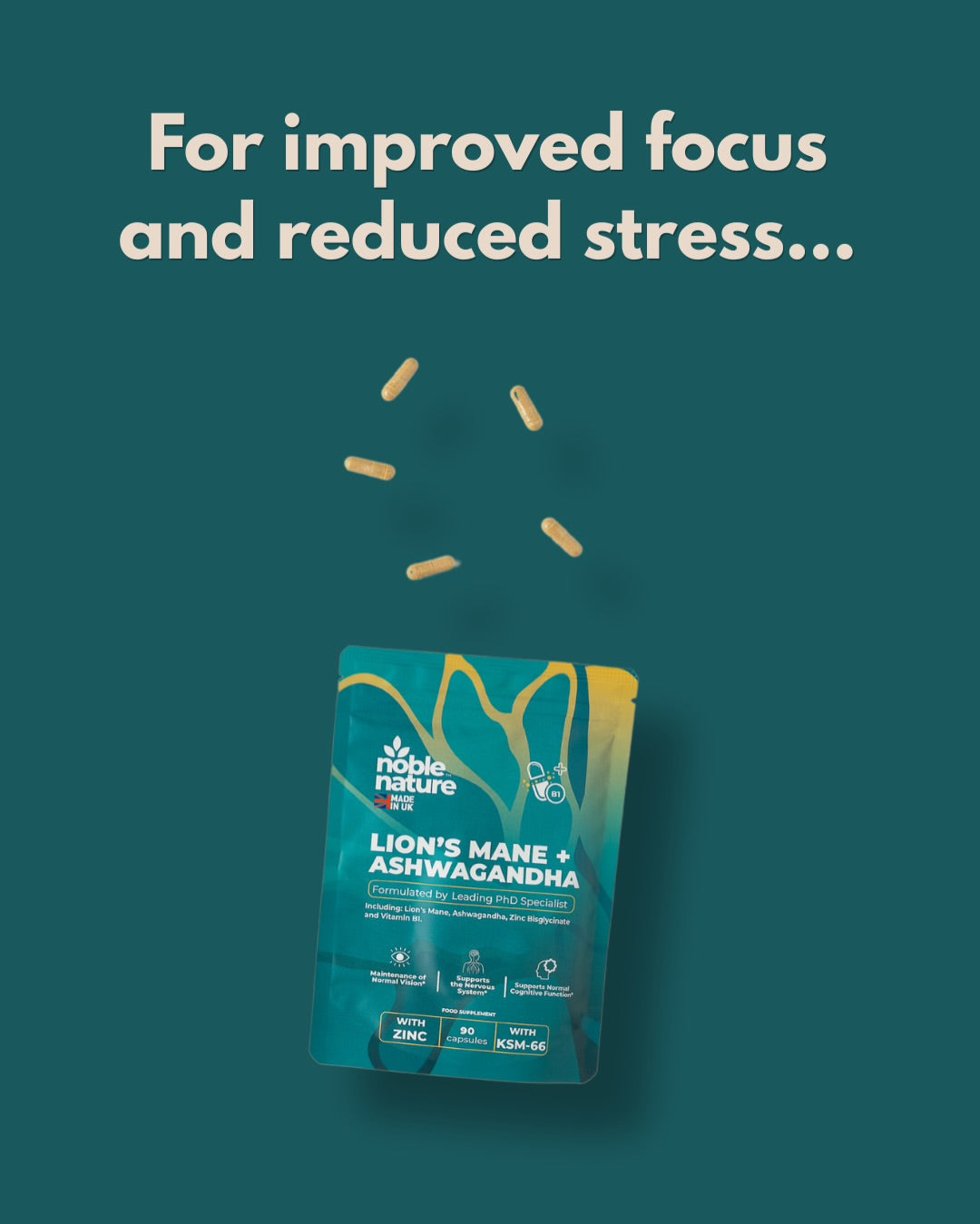
If you are looking for a supplement formulated with research-grade ingredients and transparent labelling, explore the NobleNature range. Our Lion's Mane + Ashwagandha 4-in-1 uses KSM-66 ashwagandha, formulated by a PhD pharmacologist and certified nutritionist, and manufactured in the UK to BRCGS-certified standards.
Share:
Beetroot Food vs Supplements: Which Delivers More Nitrate and When Does It Matter?
Why It Has to Be KSM-66: The Case for Choosing a Standardised Ashwagandha Extract