

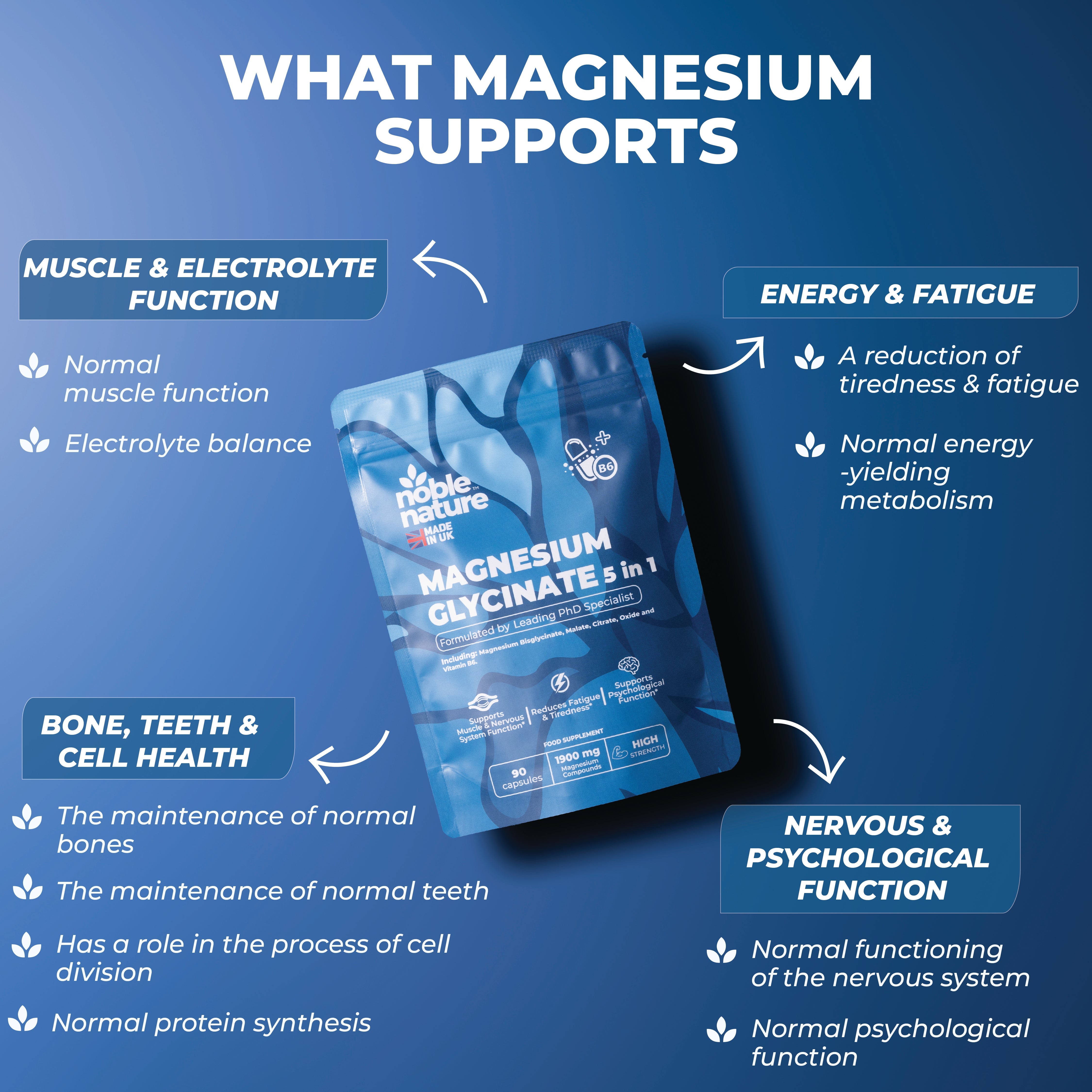
Magnesium glycinate is everywhere on TikTok right now. Sleep influencers swear by it. Recovery accounts recommend it. And if you've been lying awake at 2 a.m., wondering whether it's actually worth buying, you're not alone.
Here's the honest answer: the evidence is real, but it's not magic. Magnesium glycinate is a well-absorbed form of magnesium with a growing body of research behind its role in sleep quality and muscle recovery. What it is not is a cure-all, and any brand telling you otherwise is selling hype, not science.
What Is Magnesium Glycinate?
Magnesium glycinate (also called magnesium bisglycinate) is magnesium bound to glycine, an amino acid. This binding does two things. First, it improves absorption: organic magnesium compounds like glycinate are significantly better absorbed than inorganic forms such as magnesium oxide, which research published in the Journal of the American College of Nutrition showed was only 43% soluble even under peak digestive conditions.
Second, glycine is not just a carrier. It is an inhibitory neurotransmitter in its own right, with research suggesting it interacts with NMDA receptors in ways that may support relaxation and sleep onset. This dual action, magnesium plus glycine, is a key reason the glycinate form is commonly chosen for sleep support over cheaper alternatives.
How it compares to other forms
|
Form |
Absorption |
Common use |
Digestive tolerance |
|---|---|---|---|
|
Magnesium oxide |
Poor (4-8%) |
Laxative effect |
Often causes loose stools |
|
Magnesium citrate |
Good |
General supplementation |
Mild laxative at high doses |
|
Magnesium glycinate |
Good |
Sleep, muscle recovery, nervous system |
Generally well tolerated |
|
Magnesium malate |
Good |
Energy, fatigue |
Well tolerated |
The form matters more than most supplement labels acknowledge. A product with a high milligram count but poor-quality magnesium oxide is largely going to waste.
Magnesium Glycinate and Sleep: What Does the Evidence Say?
This is where the TikTok conversation gets simplified, and where it is worth slowing down.
Magnesium contributes to normal psychological function and to the reduction of tiredness and fatigue. These are authorised claims under UK food supplement regulations, and they are grounded in real physiology. Magnesium plays a role in regulating the nervous system, supporting melatonin production, and modulating cortisol. All three of those pathways connect directly to sleep quality.
The clinical evidence
A 2025 randomised, double-blind, placebo-controlled trial published on PubMed Central specifically examined magnesium bisglycinate supplementation in adults with self-reported insomnia. The results were meaningful:
-
The magnesium bisglycinate group saw a 28% reduction in Insomnia Severity Index (ISI) scores over 28 days
-
The placebo group saw an 18% reduction over the same period
-
The between-group difference was statistically significant (p = 0.049)
-
Most improvements occurred within the first 14 days and were sustained thereafter
A broader 2023 systematic review in Biological Trace Element Research, covering 7,582 subjects across nine studies, found a consistent association between magnesium status and sleep quality in observational research. The picture from randomised controlled trials was more mixed, with the authors calling for larger, longer-duration trials to confirm causality.
The honest takeaway: magnesium glycinate is not a sedative and it does not guarantee better sleep. But the evidence supports a genuine physiological role in sleep regulation, particularly for people whose magnesium intake is low. It is one of the more evidence-backed supplements in this space, not the most hyped.
Why glycine adds to the picture
The glycine component is not incidental. As an inhibitory neurotransmitter, glycine has been studied for its ability to lower core body temperature, which is a key physiological trigger for sleep onset. Some research suggests glycine supplementation at around 3g may support sleep quality and reduce daytime fatigue, though evidence here remains early-stage. In magnesium bisglycinate, the glycine content is lower, but may still contribute a complementary effect alongside magnesium's own mechanisms.
Magnesium Glycinate and Muscle Recovery
The recovery angle is less discussed than sleep, but the evidence is solid. Magnesium contributes to normal muscle function and to the reduction of tiredness and fatigue. Both are authorised UK health claims, and both are directly relevant to anyone training regularly.
Here is why it matters physiologically. During intense exercise, magnesium is depleted through sweat and metabolic demand. When intracellular magnesium drops, the Mg-ATP complex is impaired, which disrupts the glycolytic enzymes essential for muscle contraction and energy transfer. The result is increased soreness, slower recovery, and reduced performance.
What the research shows
A 2024 systematic review published in PMC examined magnesium supplementation specifically for muscle soreness and recovery. Key findings:
-
A study by Reno et al. (2022) using 350mg of magnesium glycinate daily for 10 days found significantly reduced muscle soreness at 24, 36, and 48 hours post-exercise compared to a control group
-
Magnesium supplementation improved perceptual measures linked to performance and recovery
-
Athletes in competitive training showed protective effects on muscle damage markers including creatine kinase and lactate dehydrogenase
The practical implication: physically active individuals likely need 10-20% more magnesium than the standard recommended intake, and supplementation in capsule form taken around two hours before training appears to be the most effective protocol based on current evidence.
The review also noted that even when serum magnesium levels appear normal, intracellular deficiency can still drive post-exercise soreness. This is why dietary intake alone is often insufficient for people training at moderate to high intensity.
What to Look for in a Magnesium Glycinate Supplement
Not all magnesium supplements are equal. If you are going to take one, the formulation details matter.
Four things worth checking
-
The form of magnesium listed. Magnesium glycinate (or bisglycinate) should be the primary or only form. Products that list magnesium oxide first are prioritising cost over absorption.
-
Whether vitamin B6 is included. Vitamin B6 contributes to the reduction of tiredness and fatigue and supports normal psychological function. It works alongside magnesium in several nervous system pathways, making it a considered addition to a sleep-focused formula.
-
Third-party testing. Any brand making claims about purity and potency should be able to back them up with independent lab results. This is not standard across the industry.
-
UK manufacturing and compliance. UK-manufactured supplements are subject to stricter quality controls than many imported alternatives. This matters more than most people realise.
NobleNature's magnesium glycinate supplement is formulated with five forms of magnesium, including glycinate, malate and citrate, alongside vitamin B6. It is developed alongside a PhD scientist and registered nutritionist, manufactured in the UK, and backed by third-party lab testing. If you want to understand exactly what goes into the formulation and why each ingredient was chosen, the full product page explains the rationale.
The Bottom Line
Magnesium glycinate is not a trend. It is a well-absorbed form of an essential mineral with genuine, peer-reviewed evidence behind its role in sleep quality, nervous system regulation, and muscle recovery. The TikTok version skips the nuance. The honest version is that it works best when the formulation is right, the dose is appropriate, and expectations are realistic.
If you are sleeping poorly, training hard, or simply not getting enough magnesium through diet alone, it is one of the more sensible supplements to consider. Just make sure you know what is actually in what you are buying.
Share:
Lion's Mane Mushroom with Ashwagandha: How This Combination Supports Focus and Reduces Stress
Why Magnesium Matters: The Nutrient Gap Most UK Adults Don't Know They Have