

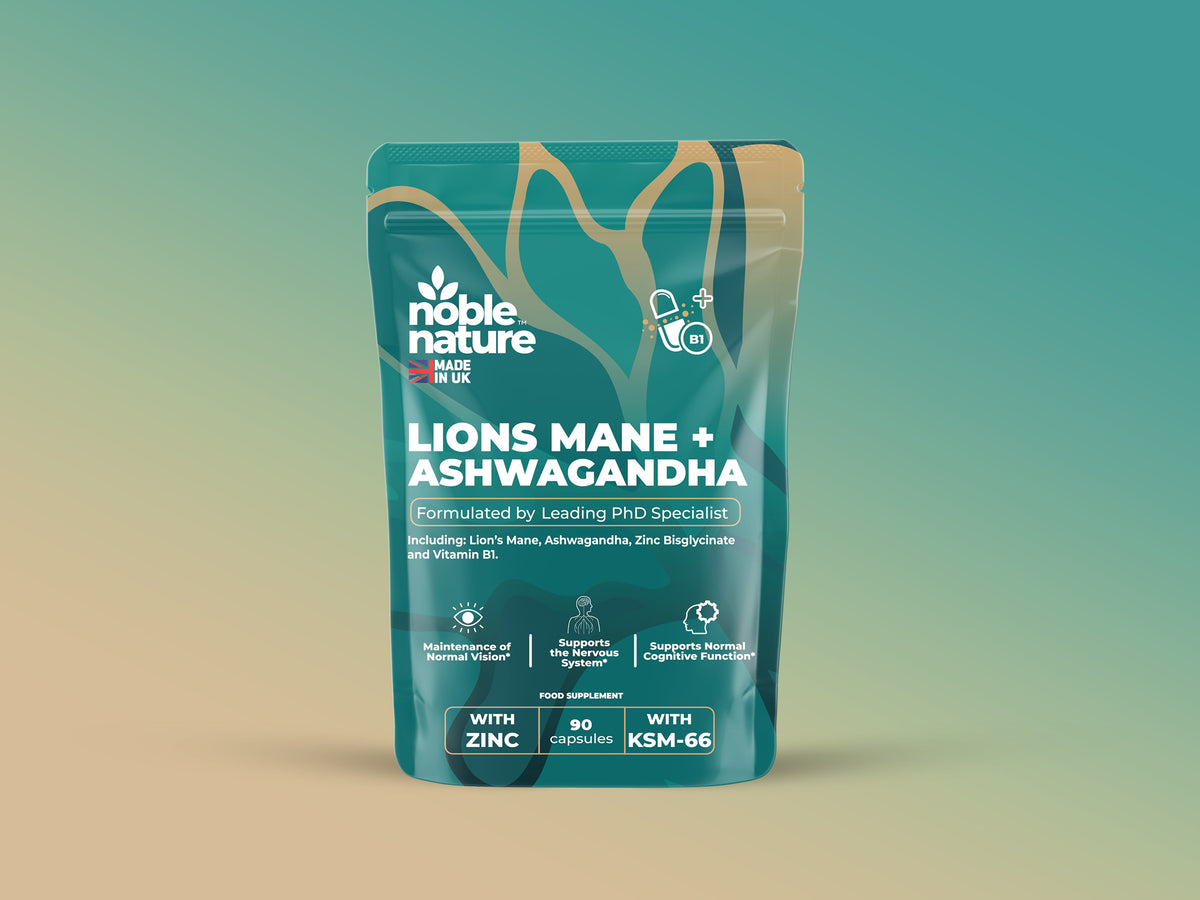
What ashwagandha seems to do, in one short answer
Key takeaway: Ashwagandha appears to influence the body's stress-response system rather than acting as a stimulant or sedative. The most credible evidence points to modest benefits for stress, anxiety and some sleep outcomes in adults with elevated baseline stress.
If you have seen ashwagandha on TikTok or Amazon and wondered whether it actually does anything, the honest answer is: possibly, for specific things, in specific people, to a modest degree.
Here is what the current evidence suggests:
-
Stress and anxiety: The most consistent signal across human trials. Adults with higher baseline stress tend to show the clearest response.
-
Cortisol: Some trials report lower cortisol levels after supplementation, which aligns with the leading biological theory of how the plant works.
-
Sleep: Promising early results, particularly for sleep quality and the time it takes to fall asleep, though effects are smaller and less consistent than for stress.
What the evidence does not support is the sweeping language often used to market it. The mechanism matters here, so that is where this guide starts.
What is ashwagandha, exactly?
Ashwagandha is the common name for Withania somnifera, a small shrub native to India and parts of North Africa. It has been used in Ayurvedic medicine for centuries, primarily as an adaptogen, a term used to describe plants that may help the body manage stress. Modern supplement science has taken that traditional use as a starting point and tried to understand what, if anything, is driving those effects at a biological level.
In supplements, you are almost always taking a root extract. Some products are standardised for withanolides, a group of naturally occurring compounds in the plant that are considered among its most pharmacologically active constituents. Others use proprietary extract blends with their own standardisation methods.
Why this matters for reading study results: Different products use different extraction methods, different withanolide concentrations, and different doses. That is one reason why trial results are not perfectly consistent. A study using a specific branded extract at 600 mg per day does not automatically tell you what to expect from a different product at a lower dose.
|
Extract type |
What it means |
Common in studies? |
|---|---|---|
|
Root powder |
Whole dried root, ground |
Less common in recent trials |
|
Root extract |
Concentrated from root material |
Yes, widely used |
|
Standardised extract |
Extract with a defined withanolide percentage |
Yes, most controlled trials use these |
|
Proprietary blends (e.g. KSM-66, Sensoril) |
Branded standardised extracts with specific processing methods |
Frequently cited in the evidence base |
How ashwagandha may work in the body
This is where most supplement marketing skips ahead too quickly. The biology is genuinely interesting, but it is important to be clear about what is a plausible theory versus what is proven in humans.
The leading theory: HPA axis modulation
The HPA axis (hypothalamic-pituitary-adrenal axis) is the central control system for the body's stress response. When you perceive a threat or pressure, the hypothalamus signals the pituitary gland, which signals the adrenal glands to release cortisol. In short bursts, that is entirely normal and useful. In people under chronic stress, the system can become dysregulated, with cortisol staying elevated for longer than it should.
The most credible hypothesis for how ashwagandha works is that it may help modulate this system, effectively helping the HPA axis return to a more regulated state. Here is a simplified version of the proposed pathway:
-
Stress signal received - the body activates the HPA axis and begins releasing cortisol.
-
Withanolides interact with stress-response pathways - the active compounds in ashwagandha are thought to influence signalling molecules involved in the stress response, though the exact mechanisms are still being studied.
-
Cortisol output may reduce - some human trials report lower cortisol levels in participants taking ashwagandha compared to placebo, particularly in people with elevated baseline stress.
-
Downstream effects on mood and sleep - lower cortisol may support better sleep onset and reduced anxiety, which would explain the signals seen in trials focused on those outcomes.
Other proposed mechanisms (less settled in humans)
Beyond the HPA axis, preclinical research has explored several other pathways. These are worth knowing about, but should be understood as biologically plausible rather than confirmed in human clinical trials:
-
GABAergic activity: Some research suggests that withanolides may interact with GABA receptors, which play a role in calming nervous system activity. This could partly explain reported effects on anxiety and sleep.
-
Serotonin-related pathways: Early research points to possible interactions with serotonin signalling, though human evidence here is limited.
-
Anti-inflammatory and antioxidant effects: Ashwagandha has shown anti-inflammatory properties in preclinical studies. Chronic low-grade inflammation is associated with stress and poor sleep, so this may be a contributing mechanism rather than a primary one.
The honest summary: The HPA axis theory is the most coherent explanation for the stress and cortisol findings seen in human trials. The other mechanisms are interesting but should not be treated as proven drivers of the effects people experience.
What the human studies actually show
A 2025 meta-analysis published in BJPsych Open (Cambridge University Press) pooled results from 15 randomised controlled trials involving 873 participants. The headline finding: ashwagandha supplementation was associated with statistically significant reductions in anxiety, stress and cortisol levels compared to placebo. Quality of life, however, did not show a consistent improvement across the same studies.
That gap between biomarker improvement and perceived well-being is important. It means that lower cortisol on paper does not automatically translate into every person feeling noticeably calmer in daily life.
The table below summarises the current state of the evidence across the main outcomes people ask about:
|
Outcome |
Strength of evidence |
Key caveat |
|---|---|---|
|
Perceived stress |
Moderate |
Most consistent in adults with elevated baseline stress; less clear in low-stress populations |
|
Anxiety scores |
Moderate |
Multiple trials show improvement, but effect sizes vary; most are short-term (8–12 weeks) |
|
Cortisol levels |
Moderate |
Statistically significant reductions were reported, but biomarker change does not guarantee perceived benefit |
|
Sleep quality |
Moderate-low |
Some trials show improved sleep latency and quality; results are less consistent than stress findings |
|
Sleep latency (time to fall asleep) |
Moderate-low |
A notable signal in some studies, particularly in adults reporting poor sleep |
|
Testosterone and muscle outcomes |
Low |
Limited and inconsistent evidence; often cited in marketing but not well-supported for general populations |
|
Cognitive function |
Low |
Early signals exist but evidence is insufficient to draw conclusions |
What the evidence base looks like in practice
Most trials run for 8 to 12 weeks, use standardised extracts at doses between 300 mg and 600 mg per day, and recruit adults who self-report stress or anxiety. That matters because it means the findings are most applicable to people in that situation. Using ashwagandha as a general wellness supplement for someone without elevated stress is less well-evidenced.
The National Institutes of Health Office of Dietary Supplements notes that while promising, the overall evidence base still consists largely of small, short-term trials with varying formulations. That is an honest assessment, not a dismissal. The direction of the evidence is reasonably consistent; the certainty is not yet high.
Why the online claims often go too far
Scroll through any ashwagandha listing and you will see phrases like "balances hormones", "fixes cortisol", "boosts testosterone" and "supports total wellbeing". Some of those claims have a grain of biological plausibility. Most are a significant stretch from what the evidence actually shows.
Here is how the common marketing claims compare to the actual evidence:
-
"Fixes cortisol" or "balances your hormones": Misleading framing. Some trials show lower cortisol levels, but cortisol is not simply a problem to be eliminated. It is a normal hormone. The evidence points to modest regulation in people with elevated stress, not a broad hormonal correction.
-
"You will feel calmer within days": Unlikely for most people. The trials showing stress benefits run for 8 to 12 weeks. Expecting a dramatic overnight change sets people up for disappointment.
-
"Boosts testosterone and builds muscle": The evidence here is weak and inconsistent. A handful of small studies exist, but this is not a well-supported claim for general populations and should not be a primary reason to buy.
-
"Improves cognition and focus": Early signals exist in preclinical research, but human trial evidence is insufficient to make this claim with any confidence.
-
"Supports total wellbeing": Too vague to be meaningful. The 2025 meta-analysis specifically found no consistent quality-of-life improvement even when stress and cortisol markers improved.
The part most coverage misses is that a supplement can have a real, measurable effect on a biomarker and still not produce the broad transformation being marketed. Honest supplement education means holding both things at once: there is a credible mechanism and a reasonable evidence base for stress support, and the claims often made around it still go well beyond what that evidence supports.
What to check before buying an ashwagandha supplement
If you are considering trying ashwagandha, the product you choose matters. Here is a practical checklist:
-
Extract type and dose: Look for a root extract, ideally standardised for withanolides, at a dose between 300 mg and 600 mg per day. This aligns with the range used in most positive human trials.
-
Withanolide percentage: Some products state this clearly (typically 2.5% to 5%). If a product does not disclose it, that is worth noting.
-
Third-party testing: Reputable brands publish evidence of independent lab testing for purity and potency. This is especially relevant in the UK supplement market, where quality varies considerably.
-
Claim language: If a product promises to "fix your hormones", "boost testosterone dramatically" or "transform your sleep overnight", treat that as a red flag. The evidence does not support those claims.
-
Suitability: Ashwagandha is not appropriate for everyone. It should be avoided during pregnancy and is not recommended for people with thyroid conditions without medical guidance. If you take prescription medication or have a diagnosed health condition, check with a GP or pharmacist before starting.
The NIH also notes that long-term safety data are still limited, so this is not a supplement to take indefinitely without periodic reassessment.
Bottom line
Ashwagandha is not a miracle supplement, but it is not snake oil either. There is a credible biological rationale for its use in stress support, a reasonable body of human trial evidence behind it, and an honest set of limitations that any good guide should acknowledge.
Three things worth holding onto:
-
The mechanism is plausible, not proven. HPA axis modulation is the best current explanation for the stress and cortisol findings. The other proposed pathways are interesting but not yet confirmed in humans.
-
The benefits are modest and take time. Most trials ran for 8 to 12 weeks. If you try it, give it that long before concluding, and do not expect dramatic change.
-
The product matters. A standardised root extract at an evidence-aligned dose, from a brand that is transparent about formulation and testing, is a very different thing from a cheap capsule with no information on the label.
The boldness of a product's claims is usually inversely related to the quality of its evidence. That is the most useful thing to remember when choosing.
Share:
When to Take Beetroot Before a Parkrun (And How Much You Actually Need)
How Does NobleNature Formulate Its Beetroot and Vitamin B12 Supplements?