

Most people do not think about eye nutrition until something prompts them to. A conversation with an optician. A noticeable change in how their eyes feel after a long day at a screen. An ageing parent diagnosed with macular degeneration. Whatever the trigger, the question that follows is usually the same: Is there anything I can actually do to support my eye health?
This article looks at the reasons people consider an eye health supplement, what the research says about who may benefit, and what to look for in a formula.
Important note: Food supplements are not medicines. They do not prevent, treat, or cure any eye condition. If you have concerns about your vision or eye health, speak to a qualified optician or ophthalmologist.
The Rise of Digital Eye Strain
Screen time has increased substantially over the past decade, and UK working adults are now among the heaviest digital device users in the world. A 2024 study of UK and Irish working adults found that those using digital devices averaged 9.7 hours of screen use per day. Of those surveyed, 62.6% met the threshold for digital eye strain (DES), with 89.5% reporting at least one ocular symptom.
Digital eye strain is not a disease. It is a collection of symptoms that can arise from prolonged screen use, including:
-
Dry or irritated eyes
-
Blurred or fluctuating vision
-
Headaches
-
Eye fatigue or discomfort
-
Sensitivity to light
The mechanism is partly mechanical. When focusing on a screen, blink rate drops from the normal 14 to 16 times per minute to as few as 4 to 6 times per minute, according to a comprehensive review of digital eye strain symptoms. Less blinking means less tear film renewal, which leads to dryness and irritation.
Where Eye Nutrition Fits In
Screen-related discomfort is primarily a behavioural and ergonomic issue. Rest breaks, screen positioning, and hydration all matter. Eye nutrition does not treat digital eye strain directly, and no supplement should be marketed as doing so.
What nutrition research does explore is whether certain micronutrients, particularly carotenoids like lutein and zeaxanthin, play a role in the structural health of the retina over time. That is a different question, and a more nuanced one.
Age-Related Changes and Macular Health
The most clinically significant reason people look into eye nutrition is age-related macular degeneration (AMD). AMD is responsible for over half of blind and partial sight certifications in the UK, making it the leading cause of vision loss in older adults in this country.
AMD affects the macula, the central region of the retina responsible for detailed vision. It progresses slowly in most cases, and many people are not aware of early-stage changes until they are picked up during a routine eye examination.
What the Research Shows About Diet and AMD
Researchers have investigated whether dietary intake of lutein and zeaxanthin, two carotenoids concentrated in the macula, is associated with AMD risk. A meta-analysis of six longitudinal cohort studies on lutein, zeaxanthin, and AMD risk found:
-
High lutein and zeaxanthin intake was not significantly associated with a reduced risk of early AMD
-
High intake was significantly associated with a reduced risk of late AMD (pooled relative risk 0.74)
-
A 32% reduction in neovascular AMD risk was observed in those with the highest intake
This is meaningful data, but it requires careful interpretation. These are observational associations from dietary intake studies, not clinical trials. The Royal College of Ophthalmologists' position, as summarised in NHS guidance, is that a diet rich in fruit, vegetables, oily fish, and sources of lutein and zeaxanthin is unlikely to be harmful and may be beneficial, though current evidence does not support supplementation as a preventive measure for those without existing AMD.
The honest framing: Eye nutrition research is serious, but the evidence base is strongest for people who already have intermediate or advanced AMD in one eye, not for general prevention in healthy adults.
Dietary Gaps and the Role of Supplementation
A separate but practical reason people consider eye supplements is the gap between what the research suggests is beneficial and what most people actually eat.
Lutein and zeaxanthin are found primarily in dark leafy greens such as kale, spinach, and broccoli, as well as in egg yolks. The body cannot synthesise them. If dietary intake is consistently low, the macula receives less of the carotenoids it preferentially accumulates.
How Diet and Supplementation Compare
|
Approach |
Lutein source |
Practical consideration |
|---|---|---|
|
Diet alone |
Leafy greens, egg yolks |
Requires consistent, high intake of specific foods |
|
Supplementation |
Standardised capsule dose |
Predictable daily intake regardless of diet variation |
|
Combined |
Both |
Most comprehensive approach |
For people who eat a varied diet rich in vegetables, the dietary route is sufficient. For those whose diets are lower in these foods, supplementation may help bridge a nutritional gap. This is the straightforward, non-medical case for an eye supplement: not disease prevention, but nutritional completeness.
Vitamin A and zinc are also relevant here. Both contribute to the maintenance of normal vision under authorised UK health claim rules. Vitamin A is found in liver, dairy, and eggs, while zinc is present in meat, shellfish, and wholegrains. Again, most people in the UK get adequate amounts from food, but intake varies.
The supplement case is strongest when diet is inconsistent. It is not a substitute for a balanced diet, but it can provide a reliable daily baseline of nutrients that support normal vision function.
Who Might Reasonably Consider an Eye Supplement?
This is a question worth answering directly. An eye supplement is not for everyone, and a credible brand should say so.
People for whom it may make sense
-
Adults with low vegetable intake who want a reliable source of lutein and zeaxanthin without overhauling their diet
-
Those over 50 who want to support their nutritional baseline as part of a broader approach to healthy ageing, and who understand this is not a medical intervention
-
People who have been told by an optician to look at their diet in relation to eye health
-
Shoppers comparing formulas who want a product that includes vitamin A and zinc with authorised UK claims alongside lutein and zeaxanthin
People for whom it is not a substitute
-
Anyone with a diagnosed eye condition should follow the advice of their ophthalmologist. Supplements are not a replacement for clinical care.
-
Those expecting a supplement to reverse vision changes or treat any medical condition.
-
People who already eat a consistently varied diet rich in leafy greens and colourful vegetables may have little additional need.
The honest answer is that most healthy adults eating a reasonably balanced diet are probably getting enough. Where a supplement earns its place is in providing a structured, evidence-led formula for those who want nutritional reassurance without having to think about it daily.
What to Look for in a Formula
Not all eye supplements are formulated with the same rigour. A few things worth checking before buying:
-
Authorised UK health claims: Vitamin A and zinc are the two ingredients with authorised claims for contributing to the maintenance of normal vision. A formula that includes them provides a compliant, claimable foundation.
-
Lutein and zeaxanthin: Look for standardised inclusion with clear amounts on the label. These are the carotenoids most studied in the context of macular health.
-
Transparency: Can you see the full ingredient list with doses? A credible supplement brand will not hide behind proprietary blends.
-
Manufacture standards: UK-manufactured products under BRCGS or equivalent certification provide a baseline quality assurance.
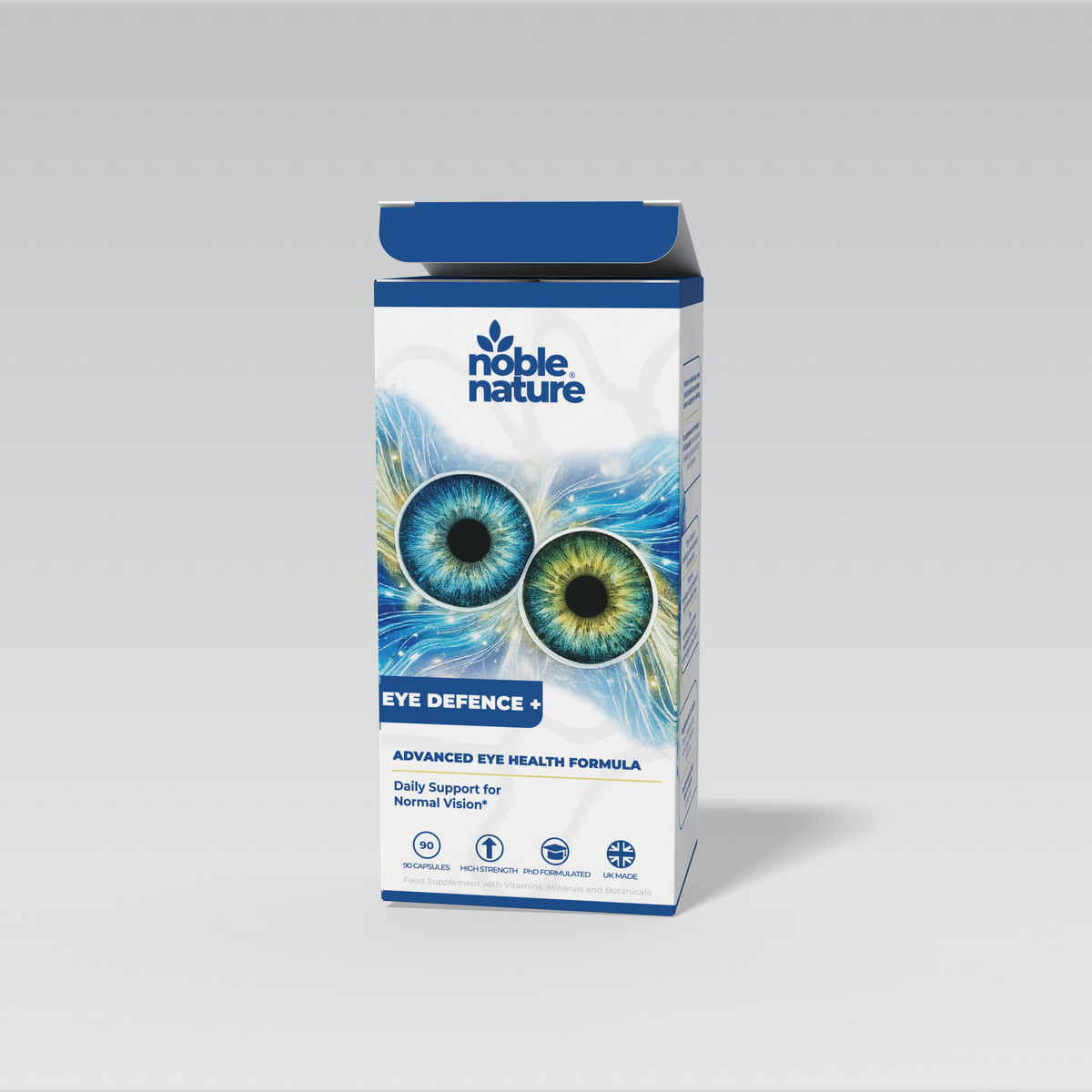
Eye Defence Plus by NobleNature combines vitamin A, zinc, lutein and zeaxanthin in a single daily capsule, formulated alongside a PhD scientist and registered nutritionist. It is designed for adults who want a straightforward, evidence-led formula explained clearly, without exaggerated promises.
Food supplements do not replace a balanced diet or professional medical advice. If you have concerns about your eye health, speak to a qualified optician or ophthalmologist.
Share:
Beetroot vs Vitamin B12 Supplements: Benefits for Energy, Exercise, and Fatigue
What Is Lutein? And Why It Matters in Eye Defence Plus